Why do toy cars have rubber tires? The answer is more practical than decorative. Rubber can improve grip on smooth floors, reduce sliding noise, and give small wheels a more convincing rolling feel. It also helps protect furniture and painted surfaces from hard plastic edges. However, rubber is not automatically better. Its quality, tread pattern, hardness, and attachment method can change the driving experience.
Industry evidence supports careful buying. Circana’s 2024 toy-market reporting shows that construction, vehicle, and outdoor-play categories remain important parts of consumer toy spending, while The Toy Association continues to emphasize age-appropriate design and safety testing. ASTM F963, the U.S. toy-safety standard, also highlights requirements affecting materials, small parts, and mechanical hazards. These reports do not measure rubber tires alone. That limitation matters.
Toy-industry analyst Richard Gottlieb has repeatedly stressed that successful toys must combine play value with dependable design. His practical principle is often summarized as, “A toy must be fun, but it must also work.” That idea fits rubber-tired toy cars closely. A tire that slips on a kitchen tile may disappoint, even when the car looks impressive. A tire that leaves residue creates another problem. Buyers should inspect tread detail, wheel alignment, odor, and whether the tires feel securely bonded. Rubber can crack over time. I once assumed softer tires were always superior; that judgment was too simple. The best choice depends on the child, surface, speed, and expected use.
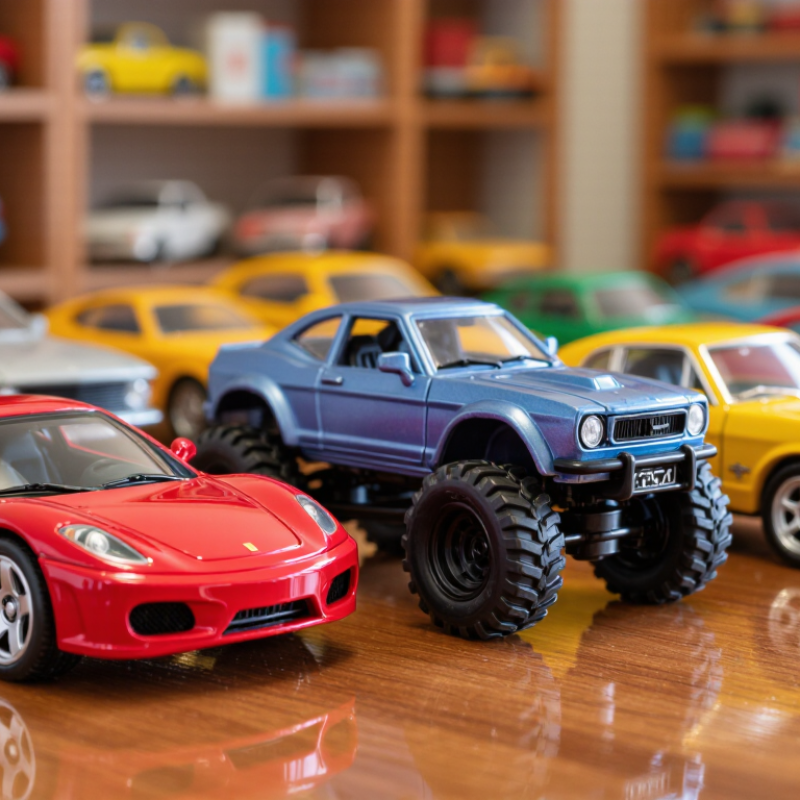
Why Do Toy Cars Have Rubber Tires? 5 Tips for Buyers
Rubber tires give toy cars a more controlled contact with the floor. Their flexible tread can improve grip on wood, tile, and short carpet. Hard plastic wheels often slide or produce sharp, noisy impacts. Rubber also compresses slightly when the car lands, reducing vibration through the axle and body. I have found that softer tires feel smoother, but they may collect dust quickly.
ASTM D2240 measures rubber hardness on the Shore A scale. It does not directly measure traction. A practical buyer’s range is often about 50 to 70 Shore A for small indoor toy tires, although construction and tread shape matter greatly. Softer compounds usually deform more and absorb shocks better. Harder compounds can roll faster on smooth floors and resist wear. Hardness alone can mislead.
Check the tire edge with a fingertip. It should feel resilient, not sticky or brittle. Look for even molding, secure attachment, and a tread that does not wobble. The 2023 U.S. Consumer Product Safety Commission toy-injury report estimated about 231,000 emergency-department-treated toy-related injuries. That figure covers many toy types, not tires specifically, but it supports careful inspection before purchase. ASTM D2240 test results are useful evidence when supplied, yet sellers should state the test method and scale clearly. Without that detail, a number may sound more precise than it is.
Rubber tires give toy cars better grip on smooth floors. They also soften bumps and reduce noisy plastic scraping. However, rubber can crack, peel, or loosen after repeated play. A deep tread may look realistic, but appearance is not proof of safety. ASTM F963-23 evaluates toys through physical and mechanical safety requirements. For wheeled toys, relevant checks can include wheel attachment, accessible parts, sharp edges, and breakage risks. The standard does not simply approve a tire because it feels soft.
Tips for buyers:
Press each tire gently and inspect the axle area. Reject wheels that wobble, shed pieces, or expose sharp plastic. Turn the car slowly. The wheels should rotate without scraping or catching. Avoid designs with thin tread blocks that seem easy to pull away. Small detached pieces can become dangerous for young children.
Consider the child’s play surface too. Smooth rubber may grip tile well but collect dust quickly. Hard plastic wheels may roll faster, yet they can slide near stairs or table edges. I would not rely on a safety label alone. Read the age guidance, examine the actual toy, and check for damage after washing or outdoor use. A careful inspection takes less than a minute. That small habit is easy to overlook.
Why Do Toy Cars Have Rubber Tires? Material Safety Matters
Rubber tires improve grip, soften rolling noise, and protect floors during play. Yet “rubber” is not a complete material description. A tire may contain synthetic rubber, plasticized vinyl, pigments, or surface coatings. Each component deserves separate attention.
Under the U.S. Consumer Product Safety Improvement Act, accessible parts of children’s products must contain no more than 100 ppm total lead. Certain phthalates must remain at or below 0.1% in accessible plasticized components. These limits cover substances such as DEHP, DBP, and BBP. The U.S. Consumer Product Safety Commission’s testing guidance explains that compliance depends on the tested component, not the product’s overall average. A tiny tire can still matter.
The EU Safety Gate 2023 report recorded 3,412 product alerts. Chemical risks represented 32% of notifications, showing why material checks cannot be casual. Buyers should request a recent laboratory report identifying the tire material, production lot, test method, and sample date. ISO/IEC 17025 laboratory accreditation adds useful credibility. I would also inspect peeling paint, oily surfaces, and strong chemical odors. Those signs are not laboratory proof, but they deserve questions. A black tire looks harmless. It is not evidence of safety. Reports can be incomplete, too, especially when suppliers change compounds without obvious visual changes.
| Buyer Tip | What to Check | Typical Material or Feature | Relevant Safety Information | Practical Buying Action |
|---|---|---|---|---|
| 1. Verify material safety | Check whether the tires, wheels, axles, paint, and other accessible parts have been evaluated for applicable children's product requirements. | Common tire materials include natural rubber, synthetic rubber, thermoplastic rubber, and thermoplastic elastomers. | For covered children's products, accessible component parts must not exceed the CPSIA total lead limit of 100 ppm. Certain specified phthalates in children's toys and child-care articles are limited to 0.1% by weight. | Look for clear age guidance, safety documentation, and material information. Do not assume that a soft or rubber-like surface is automatically free from regulated substances. |
| 2. Choose tires with reliable traction | Inspect the tread pattern, flexibility, surface grip, and wheel alignment. | Rubber-like tires provide more friction and shock absorption than smooth, hard plastic wheels. | Higher friction can help a toy car roll more predictably on common indoor surfaces and can reduce uncontrolled sliding. | For carpet and smooth floors, choose evenly molded tires with visible tread and no cracks, sharp seams, or loose sections. |
| 3. Match the tire hardness to the play surface | Consider where the toy will be used and whether the tire compound is soft, medium, or relatively firm. | Soft elastomer tires usually offer better grip and quieter operation; firmer tires generally resist deformation and may roll faster on hard surfaces. | Soft materials can collect dust and may wear faster, while hard materials can transmit more vibration and slide more easily. | Choose softer tires for indoor play and traction, or firmer tires for durability on smooth, hard surfaces. Avoid visibly brittle or sticky material. |
| 4. Inspect construction and small parts | Check that tires are securely attached and that axles, wheel hubs, and decorative parts cannot be easily detached. | Typical construction uses a molded wheel, an axle, and a separate or over-molded tire. | Damaged or detached components may create sharp edges or small parts. Small parts can present a choking hazard for children under three years of age. | Follow the age label and inspect the toy before each use, especially when it will be used by young children or around younger siblings. |
| 5. Evaluate durability and maintenance | Look for uniform molding, secure wheel rotation, resistance to cracking, and easy-to-clean surfaces. | Rubber and elastomer tires can absorb impact, but prolonged exposure to heat, ultraviolet light, oils, and harsh cleaners may accelerate deterioration. | Material degradation can cause splitting, surface tackiness, loose pieces, or reduced traction over time. | Store the toy in a cool, dry place, clean it with mild soap and water when appropriate, and replace it if the tires crack, shed material, or become loose. |
| Why rubber tires are used | Compare rubber-like tires with hard plastic wheels for grip, noise, comfort, and handling. | Elastomeric tires deform slightly under load, increasing contact with the playing surface. | The design can improve traction and reduce rolling noise, but performance varies with tire compound, tread design, temperature, and surface type. | Prioritize the tire design that fits the child’s play environment rather than choosing solely by appearance. |
Regulatory note: The 100 ppm lead limit applies to lead in accessible component parts of covered children's products under the Consumer Product Safety Improvement Act. The 0.1% phthalate limit applies to certain specified phthalates in children's toys and child-care articles. Applicable requirements can vary by product design, intended age, and use.
Rubber tires help toy cars grip smooth floors, soften bumps, and roll with less sliding. When I test replacement wheels, I press a fingernail into the tread and compare that feel with a Shore A reading. Softer rubber usually grips better on tile, but it can drag on carpet and collect dust. Harder rubber rolls quickly and resists scuffing, yet may chatter across a table. Shore A numbers are useful, not absolute. Feel matters. A small wheel with a thin tread can feel harder than its label suggests. I once chose a soft set for a wooden track and regretted it; the cars slowed at every bend.
Check axle fit before judging tread patterns. Measure axle diameter, wheel width, and the gap between the wheel and body. The hole should turn freely without noticeable side-to-side wobble. Too tight, and the car may stop after a few turns. Too loose, and the wheel can scrape the chassis. Tread design matters on rough play surfaces, though deep grooves rarely help on a clean indoor floor. Look for even molding, rounded edges, and no rubber flakes. To assess wear, run the car twenty times over the intended surface, then inspect flattening, cracks, and shiny patches. Count the turns. Cheap-looking wear is not always poor quality; soft rubber may simply trade durability for grip. Published hardness can vary between batches, so test one wheel when possible.
Rubber tires improve grip, reduce noise, absorb small impacts, and help protect floors. When comparing toy cars, check hardness, axle fit, tread design, and expected wear.
The chart uses a practical buyer-reference score from 0 to 100. Softer rubber generally offers better grip, a correctly fitted axle helps the wheel roll smoothly, deeper tread can improve traction, and stronger wear resistance supports longer use. Exact performance varies with tire material, wheel size, surface, and play conditions.
Rubber tires can soften rolling noise and improve grip on smooth floors. They may also protect a table from sharp plastic edges. However, soft tires do not automatically make a toy safer. I once focused too much on wheel texture and overlooked the safety information on the package. That was a poor buying habit.
Buyer tip four: check whether the toy’s documentation references EN 71-1 or ISO 8124-1, where applicable. These standards address mechanical and physical safety concerns, including small parts, sharp points, accessible mechanisms, and wheel security. A tire should not detach easily when gently tested by an adult. Do not pull aggressively or modify the vehicle. Look for clear instructions and traceable manufacturer information.
Read the age label carefully. It should match the child’s abilities, not just their birthday. A three-year-old may still place small wheels or loose axle caps in their mouth. The warning deserves attention. Check for choking-risk language, supervision advice, and assembly limits. Age labels can be missed when packaging is colorful or crowded. That matters.
A reliable seller should provide readable compliance information, not vague claims such as “tested” or “safe.” Compare the printed details with the product description before purchasing. Standards can differ by market and product type, so confirm the requirements where the toy will be used. Rubber tires are useful, but documentation carries more weight.
Rubber tires improve grip on smooth floors and reduce noisy plastic scraping. They also soften small bumps. Soft is not automatically safer.
Press each tire gently and examine the axle area. The wheel should not wobble, scrape, or catch. Reject peeling rubber or exposed sharp plastic.
No. Deep tread may look realistic, but appearance proves little. Thin tread blocks can detach during repeated play.
“Rubber” may include synthetic rubber, plasticizers, pigments, or coatings. Accessible parts should meet applicable chemical limits. Black color proves nothing.
In the United States, accessible parts must contain no more than 100 ppm total lead. Certain phthalates must remain at or below 0.1%.
Request a recent laboratory report identifying the material, production lot, test method, and sample date. Accredited laboratory testing adds useful credibility. Reports can still be incomplete.
Match the label to the child’s abilities, not only their birthday. A young child may place a loose wheel or axle cap in their mouth. Read choking warnings carefully.
Rubber may grip tile but collect dust quickly. Hard plastic wheels can slide near stairs or table edges. The play surface matters more than expected.
Watch for peeling paint, oily surfaces, strong odors, loose parts, or wheel damage. These signs are not laboratory proof. They deserve questions.
No. Compare the package with the actual toy and product details. I once trusted colorful safety information and missed a loose wheel. That was careless.
Why do toy cars have rubber tires? Rubber tires provide traction on smooth surfaces, reduce slipping, and help absorb small shocks during play. Their softness is often described using Shore A hardness, such as ASTM D2240, while tread patterns and wheel construction influence grip, rolling performance, and durability. Wheel and axle design also matter because a properly fitted axle keeps the car stable and allows the wheels to turn smoothly.
When choosing toy cars, buyers should compare tire hardness, tread depth, axle fit, and signs of wear. It is also important to review material-safety information, including limits for lead and phthalates under applicable product requirements. Toy safety may involve evaluations such as ASTM F963-23, EN 71-1, and ISO 8124-1, which address construction, mechanical risks, and other safety factors. Finally, check that the age label is clear and suitable for the intended child, helping ensure the toy matches the child’s abilities and play environment.

Hoopla Toys