Hot Wheels collections grow quietly. One car becomes ten, then several trays, boxes, and crowded shelves. Learning how to storage hot wheels cars efficiently helps protect value, improve access, and reduce everyday clutter. It also prevents small problems, such as scratched blister packs, missing cars, and crushed cardboard corners.
Industry data explains why this subject matters. Mattel’s latest annual reports continue to identify Hot Wheels as one of its core global brands. The company also emphasizes product innovation, collector engagement, and broad retail distribution. Circana’s global toy market reports show that collectibles remain an important part of children’s and adult consumers’ toy spending. These findings suggest that Hot Wheels storage is not only a household organization issue. It can also support long-term collection care.
The best system depends on scale, packaging, room conditions, and collecting habits. Clear drawer organizers can keep loose cars visible, while stackable cases suit premium models and unopened packages. Acid-free sleeves and stable temperatures may help reduce dust, moisture, and fading. Keep direct sunlight away.
Small details matter.
In practice, no storage method is perfect. A display case may protect cars but consume valuable wall space. A sealed container may save room but hide the collection. This guide compares practical methods for 2026, using manufacturer information, recognized toy-market reporting, and hands-on organization principles. It also questions common habits, because efficient storage should protect the cars without making the collection difficult to enjoy.
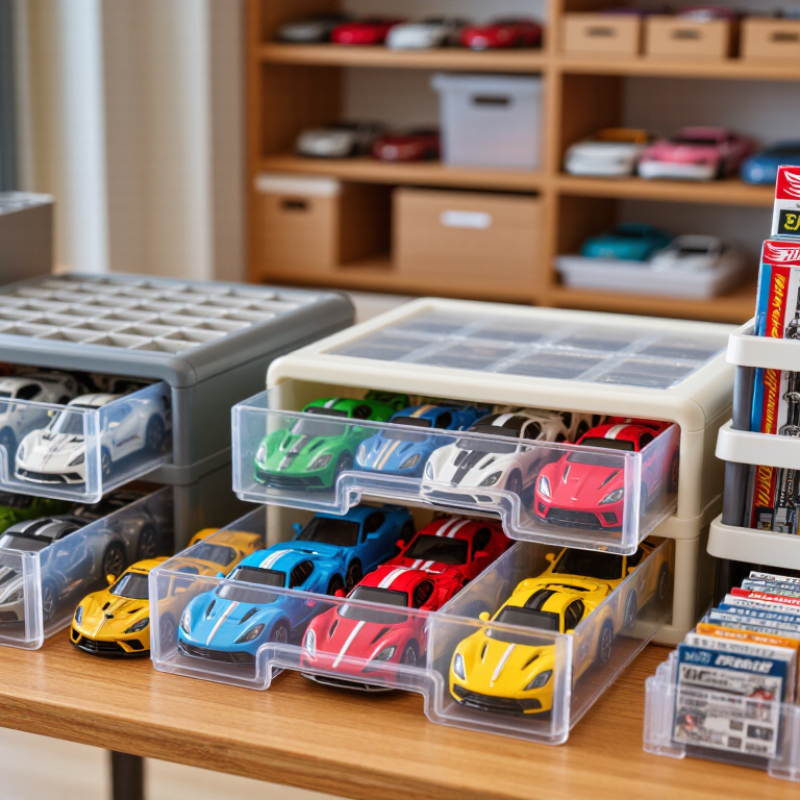
Before choosing containers, inspect the collection as if it were a small inventory system. Count loose cars, packaged cars, duplicates, and unfinished restoration projects. I use a simple spreadsheet with columns for model, condition, size, and display priority. This reveals an uncomfortable truth: many cars stay in boxes without being viewed. Storage should serve the collection, not hide it.
Measure the available space carefully. A shallow shelf may suit daily favorites, while deeper drawers can protect larger groups. Keep at least a small gap between vehicles and container walls. This reduces paint rubbing and makes removal safer. Clear, rigid compartments help identify cars quickly, but transparent plastic can still collect dust and sunlight damage. Store valuable or fragile pieces away from windows, heaters, and damp floors.
Think about how often each group is handled. Display pieces need easy access, while duplicates can occupy compact labeled bins. Separate loose cars from packaged examples to prevent pressure marks. I once stored too many cars in one drawer, and several became difficult to remove without scratches. That mistake changed my system. Leave room for future additions, even when the collection feels complete. It probably is not.
Different car types need different storage systems. Loose cars work best in shallow, compartmentalized drawers with soft dividers. Each compartment should prevent metal bodies from rubbing against wheels or axles. Carded cars need upright bins with rigid, acid-free dividers. Stacking them flat can bend cards and damage blister edges. For premium or limited models, use individual protective cases inside a closed cabinet. This reduces dust, fingerprints, and accidental drops. Oversized cars and playsets need deeper containers, but avoid forcing them into narrow spaces. A tight fit creates pressure on plastic parts.
Temperature and humidity matter more than many collectors expect. The Canadian Conservation Institute recommends stable conditions near 30–50% relative humidity for mixed collections. Its conservation guidance also favors moderate temperatures, generally below 21°C. Store cars away from radiators, windows, and damp floors. Circana’s U.S. toy industry reporting has repeatedly identified adult collectors as an important market segment, making preservation a practical investment rather than simple decoration. Still, not every expensive car needs expensive protection. I sometimes overprotect common models, which wastes space.
Tips: Label drawers by scale, series, or condition. Photograph rare pieces before storage. Use uncoated paper dividers. Check for dust every three months. Avoid loose plastic bags. They trap moisture. Leave a small air gap around sealed cases, and record any card bending before changing the system.
Before storing Hot Wheels cars, inspect each one under bright light. Wipe dust with a dry microfiber cloth. Remove loose paper, stickers, and grit from display trays. Moisture is the quiet threat. Let cars air-dry fully before packing them. I learned this after finding tiny spots on a stored base. That mistake changed my routine. I now photograph valuable or meaningful cars, then record their model, color, and condition. Keep notes simple. Use a spreadsheet or labeled card.
Sort cars by size, series, condition, or personal value. Avoid stacking loose cars in deep boxes. Their weight can scratch paint and bend delicate parts. Individual compartments or shallow drawer organizers work better. Line hard compartments with clean, acid-free paper when edges rub. Do not wrap every car tightly in plastic. Trapped air may hold moisture. For longer storage, choose sturdy containers with secure lids and small air gaps. Store them away from sunlight, heaters, garages, and damp floors. A stable indoor shelf is safer.
Label every container on two sides. Leave enough space to remove cars without forcing them. Check them often for dust, corrosion, or warped packaging. My current layout saves space, but it is not perfect. Some drawers are too full, and searching still takes time. I may separate display pieces from play pieces later. That choice matters because easy access prevents careless handling. Use clean hands, support each car underneath, and return it carefully.
Comparison of common storage methods using a practical 1–5 rating for dust protection, space efficiency, accessibility, and long-term safety. Higher scores indicate better overall performance for organized storage.
Compartment organizers and stackable drawers provide the best balance of protection, efficient use of space, and quick access. Lidded containers are useful for larger collections, while open display shelves require additional dust and sunlight control.
2026 Best Ways to Store Hot Wheels Cars Efficiently?
Optimize Space with Labeling and Modular Arrangement
A practical storage system starts with measurements, not attractive containers. Measure your shelf depth, ceiling height, and available floor space. Leave a small gap for easy access. My first layout failed because I ignored the door swing. Cars became difficult to reach.
Use stackable modules with identical footprints. Clear drawers help you check the collection without opening every compartment. Adjustable dividers can separate standard cars, special editions, and unfinished projects. Keep heavier modules on lower shelves. This reduces tipping and makes daily handling safer.
Labels should show both category and location. For example, write “Racing—A3” on the drawer and record A3 in a simple inventory sheet. Use large, waterproof labels that remain readable under low light. Avoid overly detailed categories. I once created twelve labels for tiny differences, then stopped maintaining them. Simple systems usually survive busy weeks.
Arrange cars with the front facing upward when visual checking matters. Store them vertically when space matters more. Add soft liners to reduce scratches and rattling. Keep the modules away from direct sunlight, damp walls, and unstable heat. Review the arrangement every few months. Collections change, and a perfect layout rarely stays perfect.
Storing die-cast cars efficiently requires regular care, not a crowded display case. Circana’s 2024 U.S. toy industry data identified collectibles as a significant category, showing why organized preservation matters. I use shallow drawers, acid-free dividers, and one fixed location for every model. Soft cotton gloves reduce fingerprints, while a small brush removes dust from wheels and axles.
Inspect the collection every three months. Check for loose parts, chipped paint, surface rust, and warped packaging. Photograph each item before moving it. A simple inventory records the model, condition, purchase date, and storage position. The Smithsonian Museum Conservation Institute recommends stable environments, commonly around 30% to 50% relative humidity for mixed collections. I keep storage away from windows, heaters, damp floors, and direct sunlight. Small silica-gel packs help, but they are not a complete humidity system.
My first layout failed because I stored rare pieces too tightly. Retrieval caused scratches. Now, heavier cases stay low, and frequently handled cars remain at eye level. The system still needs improvement. ASTM toy-safety guidance emphasizes routine checks for small detachable parts, which also supports practical collection inspections. Review the inventory twice yearly, remove damaged dividers, and replace overcrowded boxes. If dust appears quickly, the room or container needs investigation, not another decorative cover.
Count loose cars, packaged cars, duplicates, and unfinished restoration projects. Record each model, condition, size, and display priority. Some cars may remain boxed and unseen. That is worth reconsidering.
Use clear, rigid compartments, shallow drawers, or sturdy containers with secure lids. Leave a small gap around each car. This reduces paint rubbing and makes removal safer. Avoid overcrowding.
Store them on a stable indoor shelf, away from windows, heaters, damp floors, and garages. Let every car dry completely before packing. Moisture is quiet. Clear plastic does not block all sunlight damage.
Keep them separate. Packaged cars can suffer pressure marks when loose cars shift nearby. Use labeled bins for duplicates and separate compartments for display pieces. The arrangement may need changes later.
Inspect each car under bright light. Wipe dust with a dry microfiber cloth. Remove loose paper, stickers, and grit from trays. Do not pack damp cars. Air-dry them fully.
Label two sides of every container with a simple category and location code. For example, use “Racing—A3” and record A3 in an inventory sheet. Large waterproof labels work better. Twelve tiny categories were too many for me.
Measure shelf depth, ceiling height, floor space, and door movement before buying containers. Use stackable modules with matching footprints. Place heavier modules on lower shelves. Leave room for future additions.
Check them every few months for dust, corrosion, warped packaging, and crowded compartments. Keep display cars easy to reach. Support each car underneath with clean hands. My current layout saves space, but searching still takes time.
Storing a growing Hot Wheels collection efficiently begins with assessing the number, size, condition, and value of your cars, as well as the available space. The best approach to how to storage hot wheels cars efficiently is to match each car type with a suitable storage solution, such as divided cases, shallow drawers, stackable containers, or protective display compartments. Before storing, clean the cars gently, check for loose parts or damage, and group them by series, design, scale, or personal preference.
A well-organized system should use clear labels and modular sections that can be expanded as the collection grows. Arrange containers so frequently used cars are easy to reach, while valuable or delicate pieces receive extra protection from dust, moisture, sunlight, and unnecessary handling. Regular inspections help identify damage, overcrowding, or changing storage needs. By updating labels, adjusting sections, and reviewing the collection periodically, collectors can maintain a neat, accessible, and space-saving storage system for years.

Hoopla Toys